
EV Propaganda Logic
Having spent some time watching the evolving EV (Electrical Vehicle) market grow, I am extremely puzzled by the actual numbers and the lack of transparency from EV makers about the realities of EV production, EV limitations and the actual cost to make EV’s.
Lets start by looking at the numbers.
WPR - EV Sales by Country 2026
Looking at the table, lets look at the top 10 sales for 2024 per country:
| Country | Total EV Sales |
|---|---|
| China | 11.3M |
| United States | 1.5M |
| Germany | 570.4K |
| United Kingdom | 550K |
| France | 450.6K |
| Canada | 252K |
| Belgium | 197K |
| Netherlands | 182K |
| Sweden | 157K |
| South Korea | 130.7K |
These numbers seem quite good. Now lets look at 2024 total car sales for these same countries.
This is not a commonly easy set of data to find (as I will discuss later).
Our World In Data - Number of new cars sold, by type
Ive manually extracted the data for the above countries and it is:
| Country | Total EV Sales | Total Car Sales | %EV |
|---|---|---|---|
| China | 11.3M | 23.54 | 48% |
| United States | 1.5M | 15.2M | 9.8% |
| Germany | 570.4K | 3.0M | 19% |
| United Kingdom | 550K | 1.96M | 28% |
| France | 450.6K | 1.88M | 23% |
| Canada | 252K | 1.48M | 17% |
| Belgium | 197K | 458K | 42% |
| Netherlands | 182K | 379K | 48% |
| Sweden | 157K | 270K | 58% |
| South Korea | 130.7K | 1.39M | 9% |
Some notes about these numbers:
- They include hybrids - PHEVs and HEVS which are the largest portion of EVs (will explain later)
- These are yearly sales for these countries so this is not indicative of cumulative vehicles.
- The numbers in some countries are likely heavily skewed (will explain later).
However, lets assume these numbers represent some truth. The main truth of this table, is that all but Sweden are selling more combustion cars every year than EV cars.
When the media tells you “EV’s are the future of transport” take it with some salt (a whole lot).
For the future to be EV’s in any way EV sales per year must be over 50% in the majority of countries. Sales of 9%, 17% and 19% are not growing markets - in fact, they are shrinking markets. Because every year there are X percentage more combustion vehicles on the road, not less. Lets take some examples to explain.
The United States is selling 9.8% EV’s in their market. This means, 90.2% is combustion and every year is adding 40.2% more cars to the transport pool of cars. Thus, the EV market as a total is lagging 40% behind combustion vehicles.
South Korea, which is a big EV and HEV maker, also only has 9% of EV sales in 2024. Again, this means that 91% of the cars going onto South Korean roads are combustion cars, not EV’s.
The media tries to ‘spin’ this in terms of growth YOY (Year On Year) but even that has now flattened all over the world - the main reason for this: is cost.
Propaganda and Investment
The EV Industry is a “new” industry made up of a few key supporting industries:
- Electric Battery industry
- Electric Motor industry
- Computer and Electronic controls industry
These industries traditionally have not had a “core product” to help expand their domains. While they are often growing industries in their own right, the EV market introduced a new “product” to sell (much like Mobile Phones) and one which has a limited shelf life as well as much reduced manufacturing costs. All the things inverstors love to see in companies and products.
What was created was an EV bubble market. Where Investors spent big on EV companies for the future - and still are, but they are now becoming wary.
With this investment comes marketing. And you have seen it all before - Governments, Companies, even countries all telling you, the consumer, that EV’s will change your life and change the world for the better.
Aus Gov - The National Vehicle Strategy
Driving Ca - We have seen the future, and it is China
CarNewsChina - China to enforce world first mandatory EV energy standard
And so on… youve seen it.
But have you seen this:
Bloomberg - Chinas Abandoned Obsolete Electric Cars
This was in 2023.. and its much worse now. Bloomberg claims they are abandoned obselete EVs - but they were not. You see, the Chinese government paid every EV maker a subsidy for every car they make, and they would mark it sold then store it in some unused lot, then claim the loss as well. This happened previously with the E bikes:
The Atlantic - Bike Share Oversupply
And for the EV’s its much worse. Because now they are dumping cheap EV’s in countries and undercutting everyone:
News.com.au - China EV Giant busted in secret Aussie Act
HT Auto - Is this how Chinese EV makers are fooling the world?
And the EU began large tarriffs (before Trump) on EV’s coming to Europe because of the same problem:
European Commission - EU Commission imposes counterveailing duties on imports of BEVs
Firstlinks - Will Chinas EV boom end in tears?
Thus now, we have a clearer picture of what is happening around the world. The marketing and propoganda is essentially China paying millions of dollars for marketing and influence to dump their EV’s into a country and undercut the entire industry everywhere, but in China.
However.. this plan. Has failed hard.
2026 - The year the EV died.
It has becoming increasingly clear that the EV makers in China have been running on borrowed time (and money). You see the problem is manyfold. Here are some of the key areas that seem to be little discussed:
- EV costs are the battery. Everything else is tiny in comparison.
- All chinese EV makers have battery subsidies for each car up to 25K per car - this is why they are often sold (event with transport) at much cheaper rates than locally made EVs in Europe and the US.
- All the subsidies are starting to be halted. This began in 2023 and resulted in numerous large EV makers collapsing in China.
- Chinas economy is in a steep dive, and cannot continue this level of governmental cost any longer.
- Chinese “old” 2016 EV’s are now not very useful and as a result causing problems.
References for the above:
In 2023 China ended subsidies for buyers from the government:
Chinese Gov subsidies and money injections:
Dialogue Earth - China ends electric vehicle subsidies
Bloomberg - BYD Got 3.4 billion aud to dominate EVs
The collapse of EV companies in China:
IDN Financials - Sluggish Market leaves 50 Chinese EV makers at risk of collapse
The Guardian - China warns EV makers to stop price-cutting
Chinese Economy Broken:
Wall Street Journal - Beijings Big Problem: An Incredible Shrinking Economy
Problems with the old batteries:
MIT Tech Review - China dealing with their aging batteries
While all of the above focusses on the Chinese market, there are changes happening in the US and EU where large car makers are “getting out” of EV’s (and not a moment too soon).
Reuters - Ford Halts EV investment
EV Central - Audi abandons EV only commitment
AutoCar - Mercedes stops developing new platform for luxury EVs
And there are many, many more makers that have effectively stopped taking their companies into the EV abyss.
At some point, companies need to come to a realization that the market growth just isnt there. And if they follow the Chinese fake model the end result is a disasterous sell-off when the Ponzi scheme collapses.
The whole investment world bet on EVs. Like they are betting on AI. And the amount of commitment to a technology that has some serious flaws is akin to Segway.
What are the problems?
Power. Need more Power.
EVs dont represent a product, and I think this is the biggest issue with them. EVs are also a required change in large scale infrastructure that is incapable of catering for large EV uptake.
For example - At the suburb level the power capacity for most housing suburbs (the cables in the ground or on the poles) simply do not cater for 20% or even 10% of the suburbs population to be fast-charging their cars all at once. There is zero capacity for this at the suburb level.
At the city wide level, there is no capacity for 20% of the city to be charging their cars without large scale upgrades in mainlines, transformers, switching equipment and more. A massive investment and cost to the citizien that may not even own an EV.
Then if you look at a county or province with power system there is an even larger cost with scaling the use of EVs.
The politicians will tell you that “Home batteries” will solve this. That is a complete lie. Home batteries cannot store enough energy for fast charging even a small car. The energy needed is over 13Kwh. A home owner could build a battery bank big enough to fast charge your car and supply your house but the cost would be prohibitive.
The reality is that infrastructure needs heavy upgrading to even consider large uptakes of EVs. Look at any local bank of Tesla Super Chargers and how much the local power infrastructure needed to be upgraded before even putting the chargers in - and this is usually in places like Super Markets where they have large power supplies!
The lack of logic and simple planning of this power source problem surprises me and it is far more critical than drive duration.
Cost.
No matter how you work out the pricing. EVs are expensive to make and are only getting more expensive the more that are made. This revolves primarily around the battery and electrical systems needed to run them.
Most EVs batteries use expensive minerals and resources that as more batteries are made, more demand on those resources occur, and thus pricing for those resources increase.
This is a neverending lose-lose cycle. There are various projects underway to create Sodium based batteries and other types but these have some major side effects in longevity, charge times, and battery cycles.
Over time, EVs will continue to increase in cost and that usually means they become out of reach of the average vehicle consumer and this then reduces market share even more.
Alternatives.
The biggest threat to EVs ? - Clean fuel. And this is coming. The oil companies will make this happen and this will signal the final nail in the coffin of EVs.
Even if the solution is moderately good then the cost vs market problem disappears instantly. In fact in Germany, many Plugin Hybrid owners never use the battery and only use the combustion motor! Which the gov is trying to stop.
electrive.com - German Industry Association proposes “mandatory charging”
Rather trying to force consumers into a corner the governments should be looking at this as an example of how little traction EVs actually have in the public and better alternatives should be researched instead.
It goes to show even more that EVs are not the future.
In 2023 Porsche showed a working synthetic gasoline that claimed to be carbon neutral:
Youtube - Porsche begins producing synthetic gasoline it claims is carbon neutral
More recently a discussion on e-fuel:
BBC TopGear - Is carbon neutral e-fuel the silver bullet for petrolhead are praying for?
And this year:
THOT CURSUS - Tesla was betting on electric, but a company was preparing a new petroleum-free fuel
It is these sorts of alternatives that are likely to end the mad world that is the EV. I personally dont think they will disappear entirely, since there are good use cases for electric based transport.
EVs are NOT PHEVs or HEVs
The way much of the marketing of EVs is done is the use of “if it has a battery in it its an EV”. Then by that same notion, ICE cars are HEV because they all have a battery for the electrical system and they are recharged by an alternator?
The reason the EV market uses HEVs and PHEVs is because their numbers in market sales are far higher than BEVs (Battery Electric Vehicles).
Australian Automobile Assocoiation - Electric Vehicle Sales break records
The table for breakdown of EV sales is shown below:
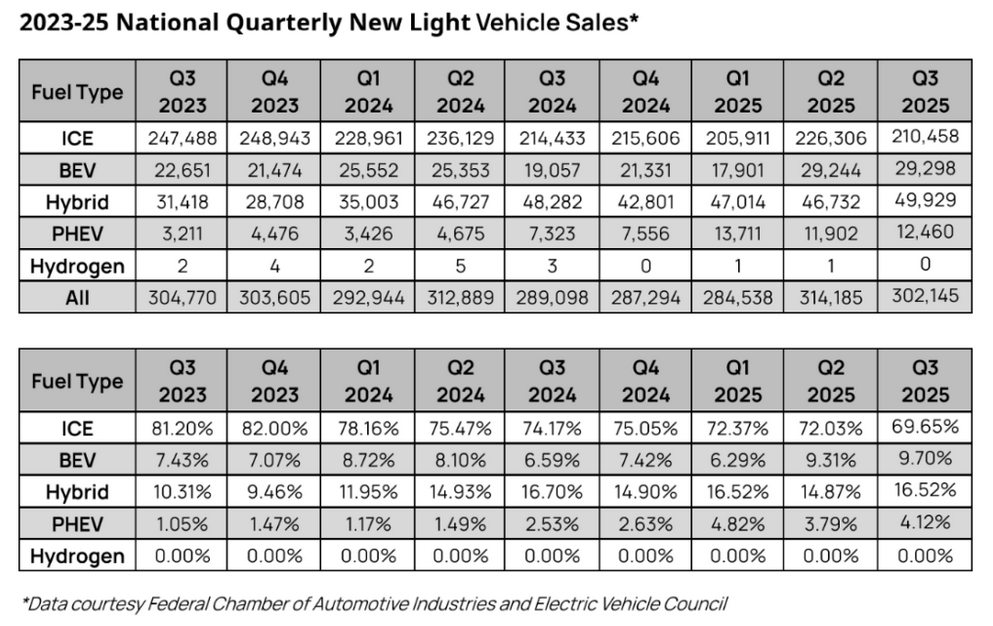
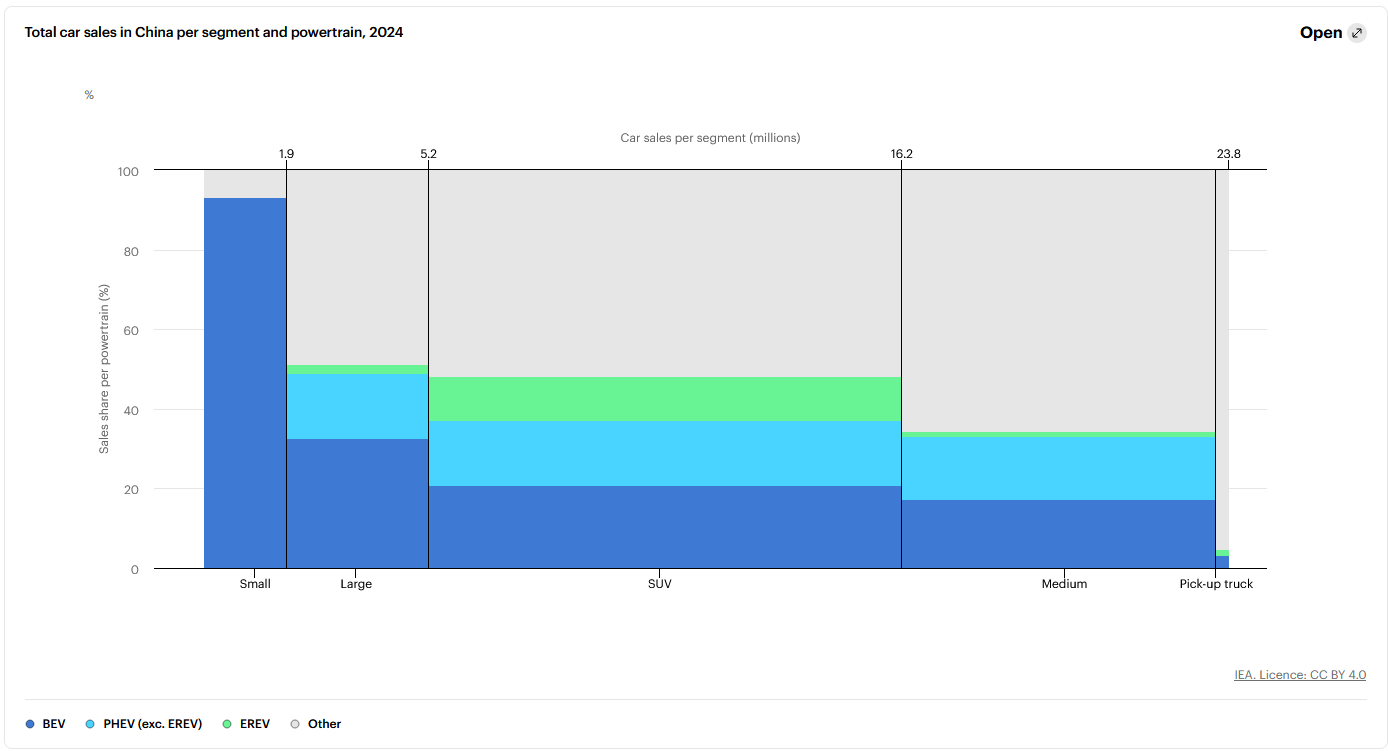
Take note of the makeup of EVs. In nearly every quarter of sales BEV’s only make up around 30% of total EV sales. Which means the numbers I showed in the initial tables are extremely misleading. Even in China this is a bigger instance, of those 11 million “EVs” sold less than half are BEVs and the majority are small EVs that are commercial use! The statistics the Chinese EV makers are using to boost their supposed boom is extremely dubious.
Source:
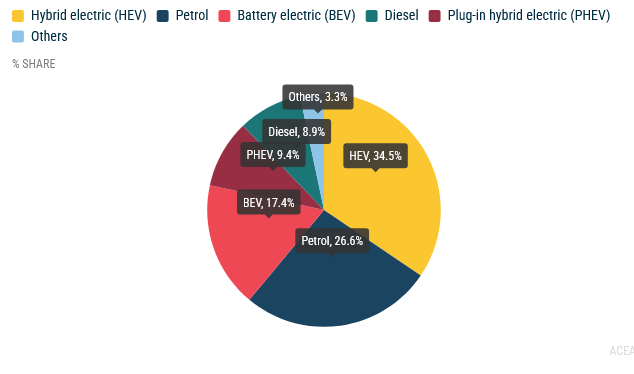
Added to these problems is the fact that in Europe HEVs and PHEVs are the large portion of EVs sold, and people are NOT using the electric charge capability - thus they are a tiny combustion engine carting around 1 tonne of battery that isnt used. This isnt only energy waste, its production waste, proof of lack of interest in EV uptake and the sign of how transport is becoming more polluting and less efficient with EV systems.
The need for exposing this madness is important. Because the overall cost and destruction that EVs are creating in our car manufacturing pipeline are devastating - on a whole different level to ICE cars.
Mining and Resources
One of the biggest impacts EVs have had is on the mining industry for resources to create batteries.
A wonderful diagram is shown here explaining the makeup of an EV battery (HEV and PHEV too).
visualcapitalist - The Key Minerals in an EV Battery
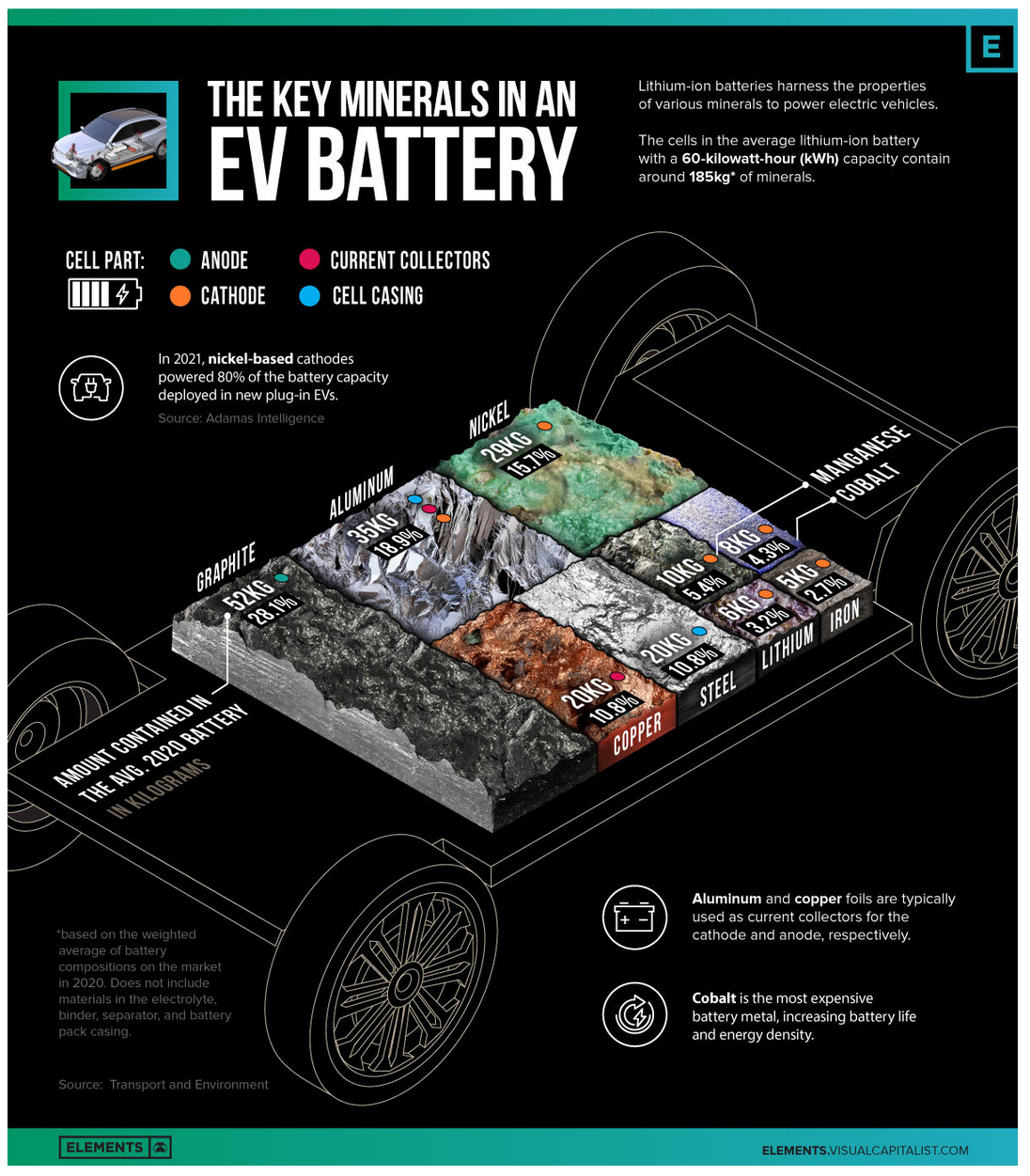
The main problem with these minerals is that many of them have extremely destructive mining practices and thus are often only done by third world countries.
For example, did you know a large portion of the lithium China gets is from Myannmar which is mined in horrific conditions. And its also why Myannmars political stability is broken because China is funding the rebel groups and the government so they can keep the lithium cheap to buy.
DW - The dirty secrets behind Myanmars rare-earths boom
Discovery alert - Myanmars critical role in Chinas Rare Earth Dominance
Lithium alone is one of the most destructive mining and refining processes as well as being very toxic. However we also know Cobalt, Nickel and Manganese are very destructive as well (to humans and the planet).
earth.org - The Environment Impacts of Cobalt Mining in Congo
When people say Im buying an EV to help save the planet - ask them which planet that is? Because its not saving planet Earth.
ICE Cars are NOT the problem
We have been lead to believe that ICE (Internal Combustion Cars) are causing a large amount of greenhouse gas emissions and changing them over will “save the planet”. This type of propaganda is a complete lie.
On average transport is around 30% the source of carbon emissions.
ourworldindata - Breakdown of Carbon Dioxide
What this doesnt tell you, is that commercial vehicle transport is the main contributor to this value and not the retail car market.
ourworldindata - Cars, Planes, trains: Where do CO2 emissions from transport come from
This graph in particular shows my point:
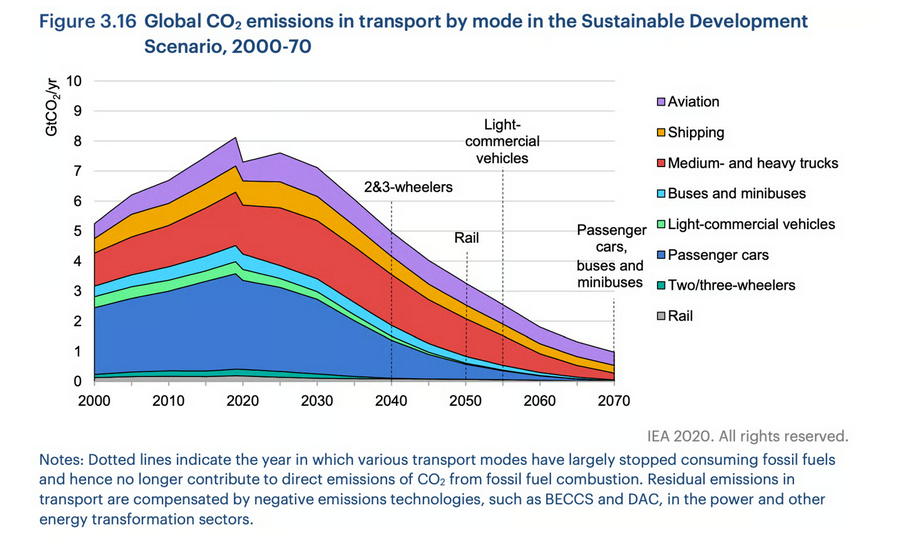
Note: The authors split up all the commercial sections to make passenger car use look bigger. But in fact, all those other sectors are commercial use. This is well over half of all emissions.
Consider that for a moment. This is 30% of CO2 output, with passenger cars around half of that - 15% and yet industry, production, commercial transport make up almost 60% of all emisions?
Now consider, that the EV “trend” is resulting in around a 10-20% use of EVs across the world (its less than that but Im being optimistic) which means the actual impact this is having on CO2 emissions is less than 3%. While China builds more coal fired power plants every year, than this amount!
ENR - China Doubles Down on Coal-Fired Power
Statista - Chinas New Coal Power Installations Reach 18 Year High
There is no sense in these EV mandates when the targets for the largest CO2 producers are not passenger car vehicles.
The evidence is damning and yet we point the fingers and blame the wrong people. This is madness.
Long term energy cost
People are feeling this today. In South Australia where I reside, we pay around $600 AUD a month for our electricity alone. This has only been increasing with the more and more “green energy” systems that have been added to our grid. We are now seeing energy economic pressures impact everyday citizens.
Considering this “energy inflation” is likely to continue, the EVs also lose one of their key benefits in the cost to “fuel” them. As infrastructure costs increase due to the increase in EVs this will only exacerbate the problem.
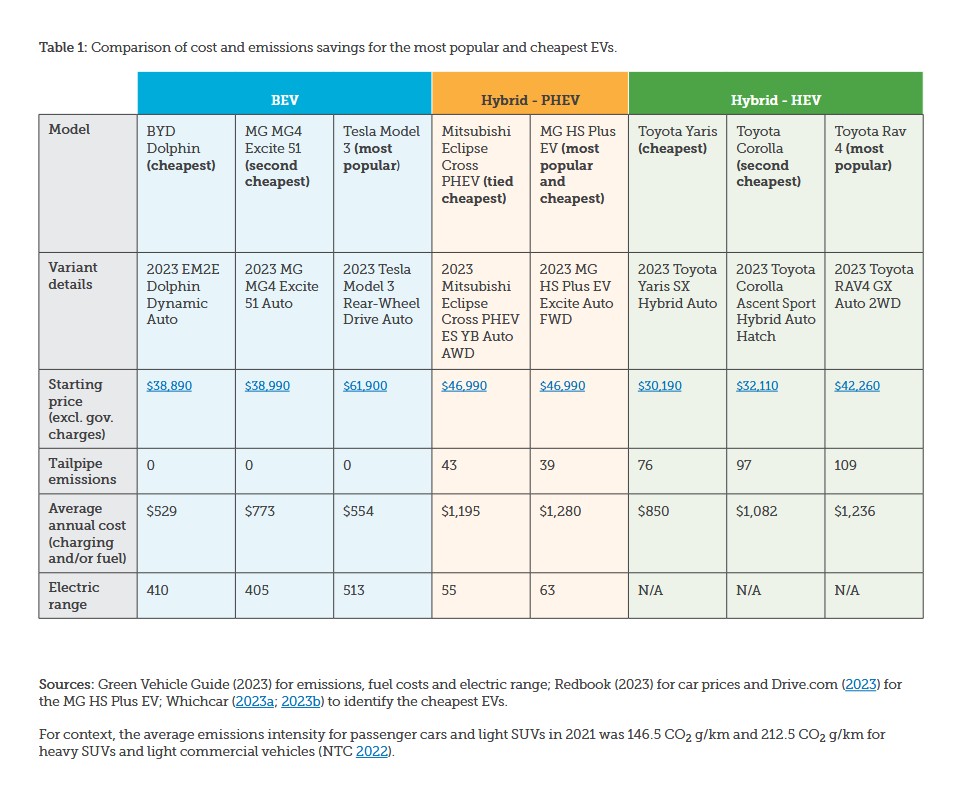
It is becoming clear that Energy suppliers also want to profit from this newly created EV industry. And as usual all citizens bear the costs, rather than the small minority that actually have EVs.
Summary
Beware the investment hypes, the propaganda and the boom bubbles being formed around what appears to be extremely illogical industries - both from a profit perspective and a long term viability perspective.
I always remind everyone of Segway - I remember the news adds for it.
Youtube - Original Commercial Segwat Promotional Video
The Guardian - This is Ginger, and its the future
Be warned. These companies want your investment money to pump stock, so they can make hefty bonuses then leave and let the company fall. This has been a rinse and repeat process for the last 20+ years in so many markets.
This year 2026, is when investors will finally realize theyve been duped and they will eject themselves from EV investment. Even HEVs and PHEVs are not long term economically viable propisitions.
I have much more information about the detail of EV development, company and government collusion and more. I will leave that for another article.