

Will Humanity Survive AI?
I am concerned, as are many, about the over-investment and over-inflation of AI and its growing impacts on jobs, energy, investment, marketing and daily lives.
The main concern is this:
If a large portion of the worlds investment money is being used in the development of AI (data centers, server farms, energy support systems, network infrastructure and so on) where is the measurable investment benefit?
Ie. What is AI’s current ROI (Return On Investment). And the numbers are staggering.
Forbes - Thoughts On Davos 2026: The AI ROI Gap Is A Visibility Gap
and
Schroders - All the market wants for Christmas is AI ROI
Deeper and Darker Problems
While many articles touch on the whole AI ROI problem, there is a far greater issue at play here. You see, we have been here before, and it did not end well. And it hasnt just happened once before, its happened at least twice on substantial scales. The scale we have now, eclipses those previous AI “winters” by many many magnitudes and they should have sounded warnings many years ago, but the bubble grows - we may run into an AI “Ice Age” if we arent careful.
A good coverage of the AI Winters are here:
History of Data Science: AI Winter: The Highs and Lows of AI
Actuaries Institue - History of AI Winters
What my primary focus of these winters is not really the technical side of things, it is the investment side.
AI investments, have been, in the past, and now, some of the largest infrastructure costs (up there with Flights to the Moon) just to get to the initial “research and testing” phases. Then you usually have a long development phase where systems are built for targeted use cases and scaled up to match the use cases.
When you see most of the companies still in the Research + some Development phase, and expending vast amounts of money on infrastructure buildout, you have to wonder, what specifically are investors going to make money on? The hope that their investment becomes AGI? And then no other AI matters - Do they really believe that will happen?
Fortune - The AI conomy could crash on mounting chip costs
In the 1970’s first AI winter, it did not happen quickly. It took years to unfold and millions spent along the way before the collapse in investment and research occurred.
These two events essentially defined the collapse:
1973: large decrease in AI research in the United Kingdom in response to the Lighthill report
1973–74: DARPA’s cutbacks to academic AI research in general
But also, many companies were involved as well, mainly in providing hardware:
- IBM — major AI and computing research, especially speech and language processing.
- Digital Equipment Corporation — perhaps the most important supplier of computers used in AI laboratories.
- Control Data Corporation — high-performance computing systems.
- Bell Labs — speech and pattern-recognition research.
- Xerox PARC — advanced computing and AI-adjacent research.
These companies (especially DEC) suffered when gov funding was removed. For example DARPA had allocated over 1 billion USD (at the time) for AI development. Japan, had invested 400-500 million USD on a single project called the “Fifth Generation Computer Systems Project”.
The Fifth Generation Computer Systems Project
The Japanese was instigated as the AI Winter in the US was in full swing. The end result was a commercial failure and a clear sign that AI Winter had ‘set in’.
The Second AI Winter was around the failure of various promising companies and technologies that outright failed due to desktop and server machines out-performing specifically designed AI hardware. Note - there is a lesson here, we will come back to.
Two of these companies that suffered the most:
- Symbolics
- Lisp Machines, Inc.
And this also lead the Venture Captial investment market away from AI research and development - funding AI became very hard again.
And now we have been in an “AI Boom” since the late 1990s with the advent of Genetic Algorithms, Machine Learning, Fuzzy Logic Systems and more. The investment machine really began ramping hard into AI from around 2012-2015.
Just How Much?
Ok. How much investment is being pumped into AI?
Standford University - Global Private AI investment hits record high with 26% growth
GMO - Valuing AI: Extreme Bubble, New Golden Era, or Both
Read this carefully as the information in this paragraph is important:
In 2025, 60% of all U.S. venture capital investments went into AI, with AI startups raising a total of over $200 billion. Ilya Sutskever, the former chief scientist of OpenAI, raised $1 billion dollars immediately upon leaving OpenAI, solely on the basis of his past accomplishments. Anthropic, the presumptive runner-up in the consumer chatbot race today, was founded in 2021, raising $124 million in seed funding; a further $580 million in 2022, $450 million in 2023, $750 million in 2024; then a staggering $16.5 billion in 2025. It is reported to be raising another $10 billion currently. OpenAI was founded in 2015 with $1 billion, raised a further $1 billion in 2019, then $6.6 billion in 2024, and $40 billion in 2025.
The money is pouring in, for the pot of gold at the end of the rainbow.
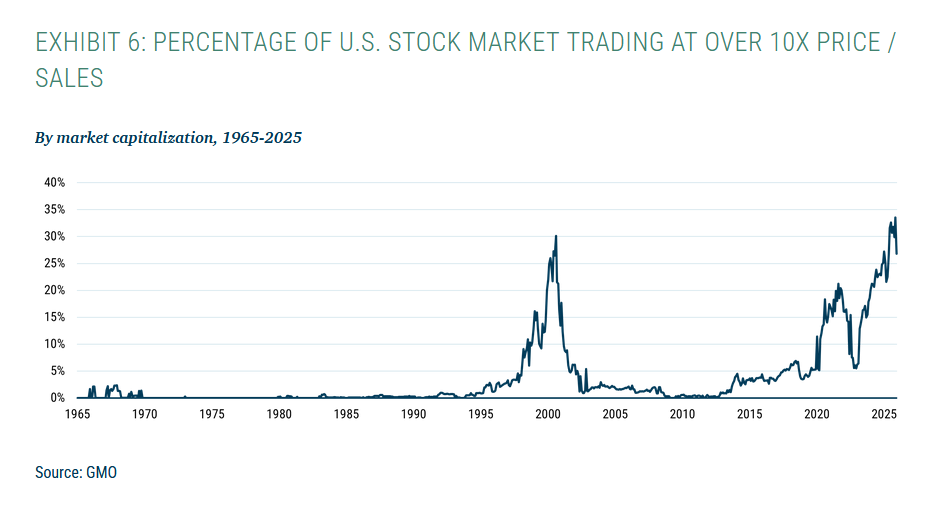
And the scale of debt this investment is bringing?
Reuters reported in December 2025 that annual issuance of debt tied to AI and data centers had risen from $166 billion in 2023 to $625 billion in 2025. The machinery of modern finance—SPVs, private credit, asset-backed securities—is being deployed in full force to build out AI infrastructure. SoftBank borrowed its first $10 billion commitment to the $500 billion Stargate data center project; Meta’s $30 billion data center, Hyperion, is financed by an off-balance-sheet SPV managed by Blue Owl Capital. ABS tied to data centers rose 19 times between 2022 and 2025.
Companies like Oracle, MS and OpenAI are struggling if you look at their books:
WSJ - Oracles Deluge of AI Debt Pushes Wall Street to the Limit
Fortune - Microsofts $440 billion wipeout, and investors angry about OpenAI’s debt, explained
Medium - Debt is AI’s Big Problem & Its Getting Worse: Layoffs
Yahoo!Finance - IBM Lost $31 billion in 1 Day on AI Fears
Does this seem sustainable?
There are signs, that it has already reached its limits:
Economy Media - Why Tech Companies Are Quietly Cancelling AI Data Centers
Silicon Money - Why Tech CEOs Are Quietly Cancelling Their AI Plans
How far can it go?
Heres whats coming - more debt, more investment and more over-hype.
What do we, the consumer, get?
- Job losses
- More viral Marketing
- Deeper personal data tracking
- Replacement of Humans with more Chatbots
- Clawbot to run everything for you?
- Search Google for you?
- Deskill you?
- Polymarket bots for you?
Companies are going to claim all sorts of wild benefits. They already are:
FIU Business - The Competitive Advantage of Using AI in Business
Unleashed - AI in eCommerce: Benefits, Use Cases and Risks
Brookings - How artifical intelligence is transforming the world
Notice that when you search for these sorts of topics there is mostly positive discussions for businesses. There is a much lesser amount of discussions in the benefits to the end-user.
Why do businesses want AI?
- Reduced workforce - save money
- Automated processes and digital integration - save money
- More transparency about business data so they can - save money
- Dont want to be left behind, because everyones doing it - FOMO
- Must have bullet point for investors - get money
I get it. I really do, AI is going to change the world, and as a business, who wants to be left behind.
But heres the question. If the end user doesnt benefit greatly from this change, then why would people buy services or tools with it? And we are seeing this backlash already, with AI consumer sentiment at extremely low levels:
Emarketer - Consumer concern is drowning out AI excitement
EY - Australia ranks equal lowest on global AI sentiment as use rises, EY study finds
Morning Consult - Why Consumer AIs Adoption Story Has Outrun Its Reputation
Does a business owner ignore consumer sentiment, pour millions into AI investment, only for the consumer backlash to reduce any service benefits they might gain, while also adding large debt burdens while doing so?
It seems like there is a large disconnect between the business world of AI and investment, and the actual consumers that will potentially be paying for it.
Upside
ROI is not looking viable anytime soon. Fundamentally, we are looking at the type of problem that was created in the Great Depression. Where the vast amount of speculation and wild hyperbolic marketing developed a Eurphoric market that was all based on a false premise.
We have a conundrum that I think many consumers are starting to realize.
With two quite clear outcomes:
Outcome 1
If AI is successful and integrates with all business, then the vast majority of us will be out of work. That means the governments wont be able to collect taxes to pay for our infrastructure (let alone anything extra) and this means business wont actually earn money because of the large unemployment.
If you want an example of 1. Its happening right now in China. Huge youth unemployment, service jobs and IT jobs disappearing fast, diving local economic activity and robotics and automated vehicles replacing menial roles (like delivery services).
China deploys humanoid robots to sort 1200 parcels per hour
The quiet layoffs sweeping Chinas tech giants
Outcome 2
If AI fails or only partially works, in niche areas (this is what I think is going to happen), then the trillions of dollars that have been poured into it, is going to be for nothing. Remember 60% of investment is going into AI in the US right now - that could be going into Energy systems, Healthcare, Infrastructure, Transport and more - areas that change peoples lives right now.
The failure of AI has huge ramifications for the whole worlds economic system. As I have written before about the whole debt bubble, a substantial portion of it, is AI debt.

And if there is a series of AI fails, and booms and fails this could be far worse when you consider how much money will be lost each time this occurs. Added to AI capabilities becoming more capable at home with tools like OpenClaw, this is scaring the hell out of the big AI companies:
Unrestricted Info - Open Claw Scares AI Companies
At some point the downturn in economies is going to be deeply impactful.
Today, we can see that businesses are still selling the same outcome they did in 2015 - “AGI is coming, and it will change the world!”. And yet. Here we are 11 yrs later.. looking at how it might change the world, and worryingly, it does not look good if it succeeds, and if it doesnt.